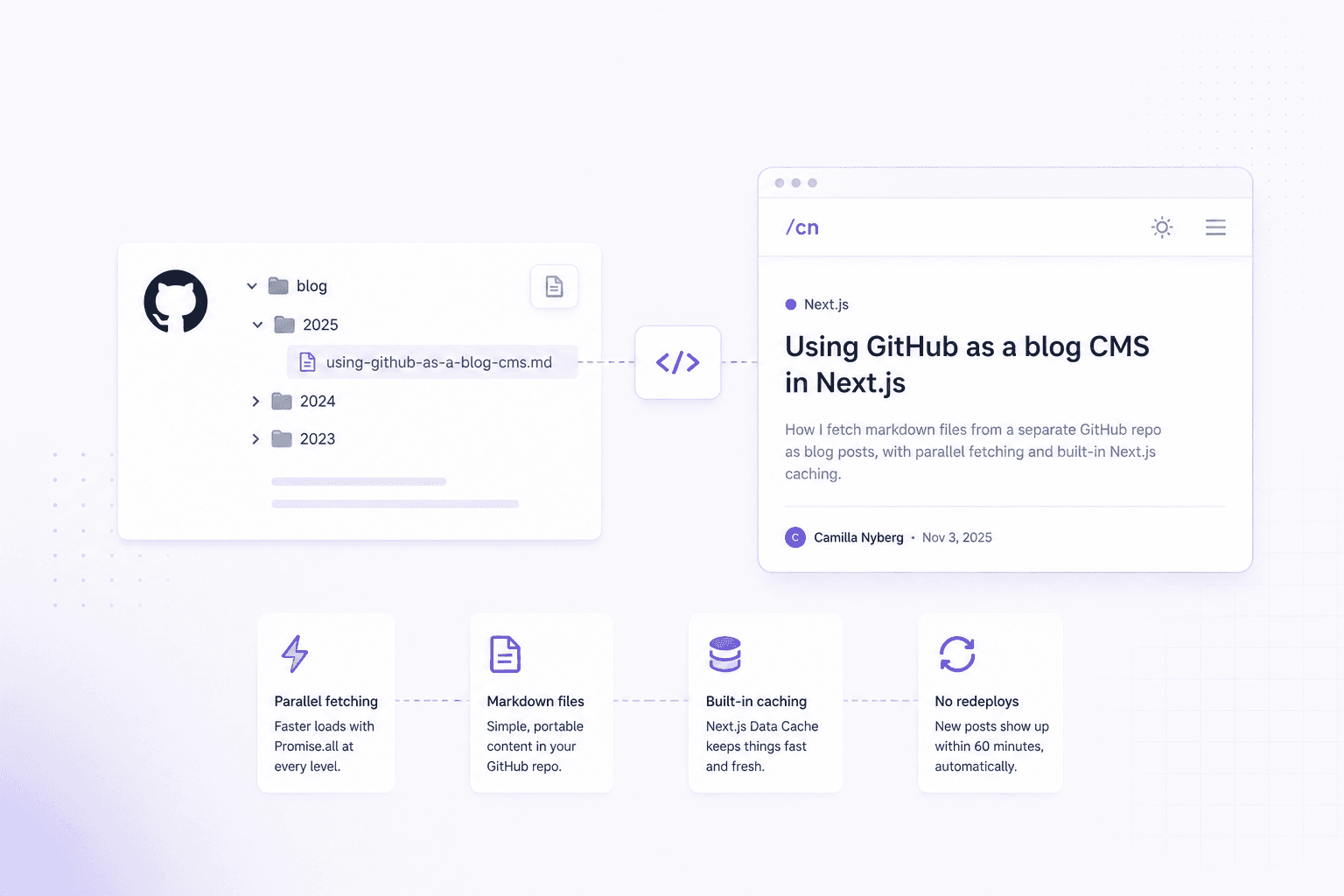
Writing blog posts in a CMS felt overkill for what I actually needed — a place to dump notes and the occasional writeup. So instead, I keep my posts as markdown files in a separate GitHub repo and fetch them at runtime. No database, no CMS subscription, no redeploy needed when I publish something new.
The structure
Posts live under blog/{year}/{slug}.md in my blog repo. The portfolio fetches from the GitHub Contents API at request time, parses frontmatter, and renders via react-markdown.
Fetching in parallel
The naive approach is sequential — fetch the year directories one by one, then each file one by one. For any reasonable number of posts that's a waterfall of HTTP requests.
The fix is Promise.all at every level:
// Fetch all year listings in parallel
const yearFiles = await Promise.all(
  years
    .filter((entry) => entry.type === "dir")
    .map(async (yearEntry) => {
      const files = await fetchJson(`.../${yearEntry.name}`);
      return { year: yearEntry.name, files };
    }),
);

// Then fetch all markdown files across all years in parallel
const posts = await Promise.all(
  yearFiles.flatMap(({ year, files }) =>
    files.filter(isMarkdown).map((file) => fetchPost(file, year)),
  ),
);
Instead of N×M sequential fetches, you get two parallel batches.
Skipping the double round-trip
When fetching a single post by slug, the GitHub API response already includes the file content — base64 encoded. No need for a second fetch to the raw download URL:
if (file.content && file.encoding === "base64") {
  const md = Buffer.from(file.content.replace(/\n/g, ""), "base64").toString(
    "utf-8",
  );
  return buildPost(file, year, md);
}
Caching
Since this runs inside Next.js App Router server components, adding next: { revalidate: 3600 } to each fetch call is all you need. Next.js caches the responses in its Data Cache for an hour — new posts show up within 60 minutes of publishing, no redeploy required.
const res = await fetch(url, {
  headers: { Authorization: `Bearer ${process.env.GH_AUTH}` },
  next: { revalidate: 3600 },
});
That's really it. GitHub becomes the CMS, markdown stays portable, and the portfolio stays fast.